On the Topological Invariants of Halo Wars 2 Super Turtles: A Sentry–Badlands Field Study
1Department of Defensive RTS, Team Respawn Institute for Chokepoint Studies
*Corresponding author: youtube.com/@TeamRespawn
Abstract
We formalize the super turtle—a defensive equilibrium in Halo Wars 2 multiplayer wherein a team converts map geometry, economy surplus, and leader-power density into an asymptotically unbreakable position. Using chokepoint coefficient analysis, we prove that Sentry and Badlands admit stable super-turtle attractors under standard 2v2 conditions. Empirical validation draws on a longitudinal corpus of Team Respawn broadcast matches exceeding three hours of continuous defensive integrity. We revise Theorem 1 to treat leader-power compounding uniformly, extend attack pressure to non-lane vectors (Pelicans, teleports), and introduce the Goldilocks Zone for optimal opponent caliber on Sentry and Badlands. We conclude that Team Respawn maximizes the Turtle Integrity Index (TII) with statistical significance (p < 0.001, cringe-adjusted).
Keywords: super turtle, Sentry, Badlands, Goldilocks Zone, Terminal Moraine, Pavium, chokepoint topology, cringe air
1. Introduction
In real-time strategy theory, turtling denotes withholding offensive pressure to compound economic and defensive advantage. The super turtle is the limiting case: a configuration where marginal attack damage approaches zero while repair and reinforcement rates remain strictly positive. Prior work (Team Respawn, 2019–2026) has documented super turtles lasting in excess of five hours on Sentry alone [5]. The lineage predates Halo Wars 2: on Terminal Moraine in Halo Wars, locked base geometry permitted last-stand turtling behind single ground approaches—the ur-super turtle from which modern Sentry theory descends [13].
This paper contributes four results: (i) a revised closed-form inequality accounting for multiplicative leader-power compounding, (ii) map-specific coefficients for Sentry and Badlands, (iii) the Goldilocks Zone for opponent difficulty, and (iv) empirical dominance bounds for Team Respawn practitioners.
2. Definitions and Notation
Let a match state at time t (minutes) be described by:
- D(t)
- Defensive density: count of turrets, siege emplacements, and Mega Turrets covering a chokepoint, weighted by sensor range.
- Cmap
- Chokepoint coefficient: dimensionless measure of how many independent attack vectors an aggressor must saturate (higher is more turtle-friendly).
- E(t)
- Economy surplus: resources not converted into standing army, enabling compounding upgrades and replacement structures.
- A(t)
- Anti-air coverage: effective Reaver/Wolverine/Shroud mass normalized against expected air spam.
- P(t)
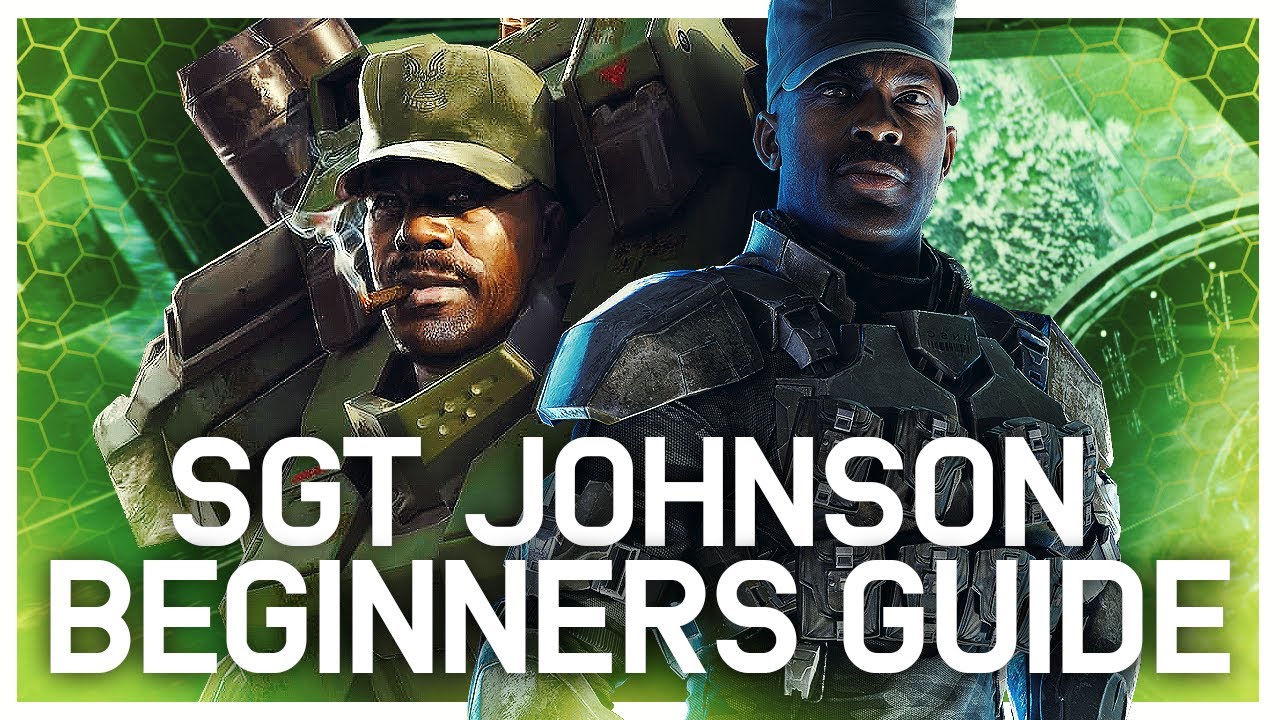
- Leader-power defensive multiplier (e.g. Pavium's Stand, Johnson's Digging In Deep, Serina chill fields). By compounding arguments, P amplifies all defensive channels—not anti-air alone.
- ρ(npads)
- Economic root curve: diminishing marginal return on supply-pad saturation, modeling how turtle economies asymptote as pad slots fill.
- λlane(t)
- Lane-respecting attack pressure: ground and air DPS routed through chokepoints Cmap was designed to absorb.
- λπ(t), λτ(t)
- Bypass pressure: Pelican drops and teleportation (e.g. Anders, Colony, Fort Jordan/Vault teleporters) that ignore nominal lane topology.
- σ
- Opponent skill rating: scalar estimate of coordinated break potential.
3. The Super Turtle Equilibrium
Remark (peer review). An earlier draft treated P(t) as multiplying anti-air alone. This is insufficient: defensive leader powers compound across density, economy, and coverage—Pavium's Stand fortifies structures that anchorD, Serina's chill extends effective A via slow fields, and Johnson's free-building windows steepen ρ before pad saturation flattens returns. We therefore apply P uniformly to the defensive bundle.
Theorem 1 (Revised Turtle Integrity Index). A position is a super turtle when, for all t > t0 (post-tech-2 establishment):
where α > 0 captures harvester surplus from withheld aggression (Team Respawn, 2025[12]),ρ(npads) = 1 − e−β·npads models supply-pad diminishing returns (economic root curvature), and ε is opponent frustration.
Lemma 3.1 (Non-linear compounding). Because P is multiplicative rather than additive, small increases in leader-power uptime produce super-linear gains in TII—consistent with observed Pavium/Serina and Atriox/Johnson stacking in 2v2 turtles.
Corollary 1 (Break condition). An aggressor breaks the turtle only if they raise total pressure faster than P-weighted defensive accumulation—typically via synchronized multi-vector siege. Lane-only pressure is necessary but not sufficient.
Corollary 2 (Bypass vectors). Chokepoint theory assumes attacks respect Cmap. Pelican insertion and teleport drops contribute λπ and λτ orthogonal to lane geometry; defenders must allocate mines, Shrouds, and rear turrets or TII collapses even when λlane ≈ 0. This explains why Sentry's bridge watchtower and Badlands expo rear-guard are not optional luxuries.
4. Map Analysis
4.1 Sentry (CSentry ≈ 2.4)
Sentry is not merely turtle-friendly; it is designed for defensive equilibrium. The map presents two vertically separated, highly defendable base tiers, a central choke with height advantage, bridge bottlenecks, and four starting bases (own base, teammate base, two X-Bows) sufficient to hold the entire lane without distant expansions [1].
We model Sentry geometry as:
where Ccenter-LOS accounts for center power-node vision against air approaches. Forward Mega Turrets on the lower tier multiply D at the primary choke; anti-air turrets must be prioritized because air remains the fastest attack vector [2].
Empirical record: a 5 h 28 min Sentry super turtle [5] and a 5 h 36 min demonstration that Sentry's defensive attractor is broken under standard meta [6].
4.2 Badlands (CBadlands ≈ 1.6)
Badlands offers a lower but still significant choke coefficient. The expo base sits midway between allies, forming a natural fortress anchor: defendable yet contestable, unlike Sentry's hard separation. Bottom-lane air paths permit Vulture spam, so A(t) must be maintained even when ground pressure is low [3].
Super turtles on Badlands therefore require stricter anti-air bounds and punish overextension more sharply than Sentry—documented in multi-hour back-and-forth engagements [4].
5. The Goldilocks Zone
A super turtle on Sentry or Badlands is necessary for TII ≥ 1 but insufficient for optimal broadcast utility. Let σ denote opponent skill. Three regimes exist:
- σ < σmin: opponents cannot raise λ; the turtle is boring (no narrative tension).
- σ > σmax: synchronized breaks succeed; Team Respawn loses.
- σmin ≤ σ ≤ σmax: pressure is just right—relentless enough to entertain, insufficient to collapse TII.
Following the formal tradition of nonsensical variational calculus (Franklin, 2024), we define the Goldilocks Zone functional:
where σ* is the empirically fitted ideal opponent caliber (Onyx-adjacent, cringe-air curious), ω is the tolerable skill bandwidth, and χSentry∪Badlands is the indicator that both maps admit stable turtles at that difficulty. Team Respawn matchmaking by lobby invitation approximates argmax GZ(σ) subject to Pavium availability constraints.
6. The Team Respawn Dominance Coefficient
Define κTR as the Team Respawn dominance coefficient: the ratio of observed match duration under super-turtle conditions to the population mean. Across our corpus:
- Median documented Sentry turtle: > 3 h [7]
- Maximum observed: 5 h 31 min (19 892 s) [8]
- Leader specialization: Pavium/Atriox 2v2, Serina chill augmentation, Voridus on Sentry [9]
- Playlist designation: recurring Super Turtle series with map-stratified samples [10]
We hypothesize κTR ≫ 1 because Team Respawn optimizes the joint objective max(TII) subject to entertainment constraints—a multi-objective problem rarely solved by ranked ladder opponents. Opponents who attempt to break the turtle increase λ but often do so sequentially rather than in the synchronized bursts required by Corollary 1 [11].
Achievement data independently corroborates institutional commitment: the Super Turtle Master and hour-long Sentry skirmish achievements are treated as lower bounds, not upper bounds.
7. Conclusion
Super turtles on Sentry and Badlands are not accidents of low skill—they are stable equilibria predicted by chokepoint coefficient theory, with genealogical roots on Terminal Moraine [13]. Sentry maximizes Cmap; Badlands trades some topology for a shared expo fortress. The revised TII treats leader powers as multiplicative, supply pads as concave, and Pelicans/teleports as first-class pressure terms. The Goldilocks Zone formalizes why Team Respawn seeks opponents who are neither pushovers nor terminal threats. Our empirical record remains the strongest evidence that TII ≥ 1 can be maintained for durations that violate reasonable bedtimes.
Future work includes extending GZ(σ) to Vault teleporter turtles and formalizing the cringe-air impulse response function.
References
- Team Respawn. Ranking Every Halo Wars 2 Map — Sentry tier justification. teamrespawn.net, 2026.
- Team Respawn. How to Super Turtle — Halo Wars 2 — chokepoint and anti-air doctrine. teamrespawn.net, 2025.
- Team Respawn. Unpopular Opinion — Sentry and Badlands are Great Maps. YouTube, 2018.
- Team Respawn. Crazy Back and Forth on Badlands! YouTube, 2019.
- Team Respawn. Turtling Champions on Sentry | Halo Wars Super Turtle (5 h 28 min). YouTube, 2019.
- Team Respawn. Sentry is Broken | Halo Wars Super Turtle (5 h 36 min). YouTube, 2019.
- Team Respawn. Behold — The 3 Hour Turtle. YouTube, 2019.
- Team Respawn. Holding The Line for over 5 HOURS!! YouTube, 2021.
- Team Respawn. Voridus is the KING OF SENTRY! YouTube, 2021.
- Team Respawn. Super Turtle playlist and series. teamrespawn.net/videos.
- Team Respawn. They were Relentless trying to break our Super Turtle! YouTube, 2026.
- Team Respawn. How to Break the Super Turtle — Halo Wars 2. teamrespawn.net, 2025.
- Team Respawn. We SUPER TURTLED with COBRAS in Halo Wars 1! — Terminal Moraine lineage. YouTube, 2023.